Key Takeaways
- Burrow size, hole shape, and surrounding soil displacement are the three fastest ways to identify which species has been digging.
- Moles create raised surface ridges and conical soil mounds, while voles leave small open holes about the size of a quarter with no mound.
- Skunks and raccoons dig shallow, cone-shaped divots overnight while hunting for grubs, often across large sections of turf.
- Chipmunks and ground squirrels leave clean, open burrow entrances without soil piles, usually tucked beside structures or landscaping.
- Removing food sources like grubs, fallen fruit, and birdseed is more effective long term than trapping individual animals.
- Correctly identifying the digger first prevents wasted money on the wrong traps, repellents, or exclusion products.
- Some diggers are protected or regulated by state law, so verifying the species also protects you legally.
You step outside with your morning coffee and spot them — fresh mounds of dirt, scattered holes, and torn-up patches of grass that weren’t there yesterday. Something has been busy overnight. The question is what, and whether it’s a one-time visitor or the start of a bigger problem.
Figuring out the culprit matters more than most homeowners realize. The wrong guess leads to the wrong trap, the wrong repellent, and weeks of frustration while the real digger keeps working. A mole problem looks nothing like a skunk problem, and treating one as the other wastes time and money.
This guide weighs the most common underground offenders side by side. We’ll compare their digging styles, the clues they leave behind, and the control options that actually work for each one — so you can match the damage in your yard to the animal responsible and respond with a plan that fits.
Why Correct Identification Beats Guesswork
Most pest control failures start with a bad diagnosis. A homeowner sees a hole, assumes it’s a mole, buys mole traps, and sets them in tunnels that don’t exist — because the real digger was a vole, which operates completely differently. The traps sit empty while the damage spreads.
Correct identification saves money and prevents overkill. Some species, like chipmunks, cause mostly cosmetic damage and may not need aggressive control at all. Others, like groundhogs, can undermine foundations and demand immediate action. Treating every digger the same way ignores the real differences in risk, behavior, and legal status.
There’s also the legal angle. Depending on your state, certain burrowing mammals are protected or require specific permits to trap or relocate. Knowing exactly what you’re dealing with keeps you on the right side of local wildlife regulations and helps you choose humane, targeted methods instead of broad poisons that harm pets and non-target species.
What Animals Dig Holes in Yards and How to Tell Them Apart
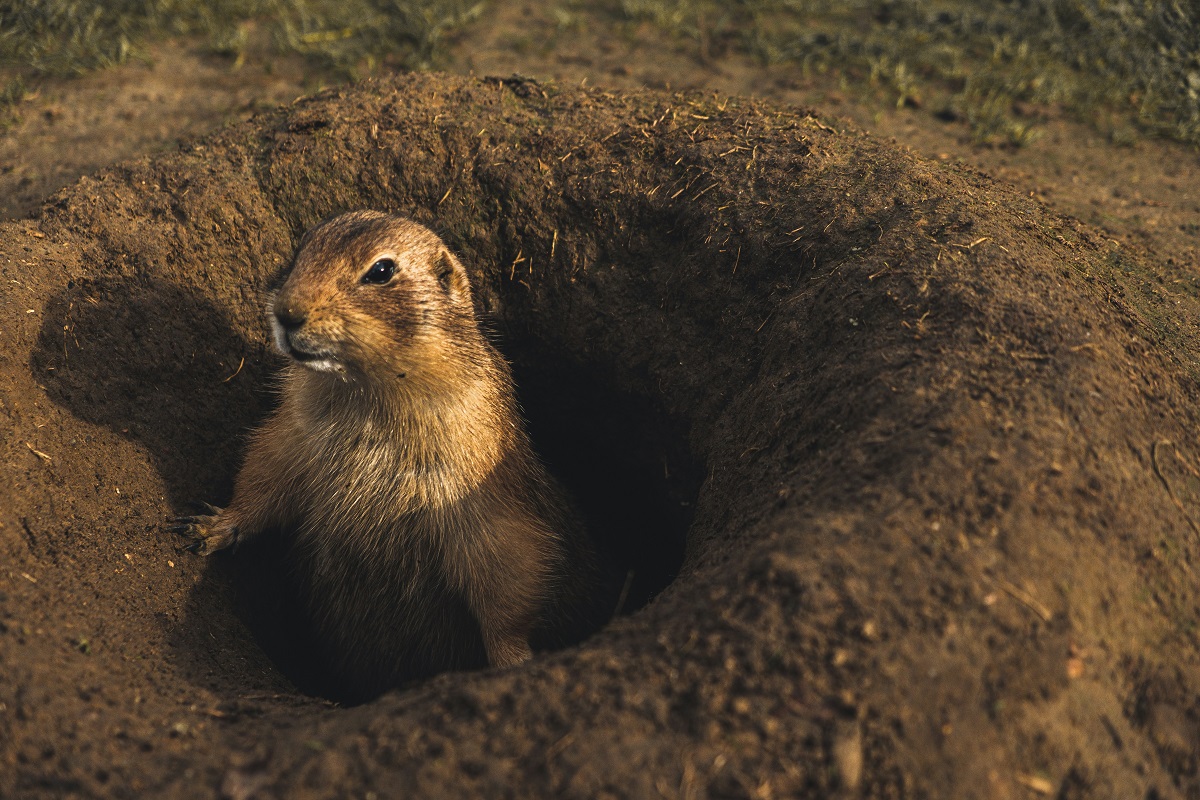
The honest answer to what animals dig holes in yards is: more than you’d think. Moles, voles, skunks, raccoons, chipmunks, ground squirrels, groundhogs, armadillos, pocket gophers, rats, snakes, box turtles, nesting bees, cicada killers, and even some larger beetles all leave distinct signatures in turf. Depending on where you live, you might also deal with badgers, foxes, coyotes digging for prey, or feral cats excavating latrines in soft mulch. The trick is reading those signatures correctly, because the wrong identification almost always leads to the wrong solution — and sometimes to repeated damage that gets worse through the season.
Start with the hole itself. Diameter, depth, shape, and the presence or absence of a soil mound narrow the field quickly. A perfectly round, smooth-walled hole suggests something that digs deliberately and uses the burrow repeatedly, while a ragged, irregular pit often means an animal was foraging for grubs or roots rather than building a home. Then look at pattern — are the holes random, clustered along a fence line, or arranged in a straight line that mirrors a tunnel below? Linear patterns almost always point to subsurface tunnelers, while scattered pits across the lawn usually mean a surface-feeding visitor. Finally, consider timing. Fresh damage every morning points to nocturnal animals like skunks, raccoons, or armadillos. New activity throughout the day suggests something that works in daylight, such as chipmunks, ground squirrels, or groundhogs. Damage that appears only after heavy rain often signals grub-feeders taking advantage of softer soil.
Here are the key features to compare when you first inspect the damage:
- Hole diameter (dime-sized, quarter-sized, golf-ball-sized, baseball-sized, or larger)
- Presence of a mound, ridge, crescent, or displaced soil
- Whether the entrance is open, plugged, hidden under vegetation, or capped with grass clippings
- Location relative to structures, gardens, compost piles, woodpiles, or water sources
- Time of day the activity appears, and whether it repeats in the same spots
- Any tracks, scat, hair, feathers, or chewed plants nearby
- Depth and angle of the hole (straight down, slanted, or curving)
- Condition of surrounding turf — is it spongy, raised, or collapsed when stepped on?
Each of these clues on its own is rarely conclusive, but stacked together they usually point to a specific culprit within the broader category of yard wildlife you’re likely dealing with. Experienced trappers and extension agents often say that identification is about 70% pattern recognition and 30% confirming details — the more features you catalog, the more confident the match.
Reading the Soil Around the Hole
The dirt tells a story. A clean, open hole with no surrounding mound usually means a surface forager that uses existing cavities, such as a snake, a rat, or a chipmunk slipping into a pre-existing tunnel. A volcano-shaped mound of loose soil signals an animal pushing dirt up from below, which is classic mole or pocket gopher behavior — though the two differ in important ways, with moles producing symmetrical cones and gophers leaving crescent or fan-shaped mounds with a plugged entrance to one side. Scattered, fan-shaped soil sprays often indicate digging done with front paws rather than tunneling from underneath, which is typical of skunks and armadillos rooting for insects.
Soil texture matters too. Finely sifted, crumbly dirt suggests careful excavation by a smaller animal, while chunky clods and torn turf indicate a larger, stronger digger working quickly. Freshly turned soil that’s still dark and moist means the activity happened within the last day; dried, crusted soil points to older damage that may have been abandoned. Pay attention to grass roots in the displaced dirt — intact root mats suggest the animal pushed soil up from below, while shredded roots mean something tore through the turf from above.
Take a photo before you disturb anything, ideally with a coin or ruler in the frame for scale. Comparing images against a field guide or extension service photo library gives you a far more reliable match than relying on memory alone, and it also creates a record you can share with a wildlife control professional if the problem escalates. Many state cooperative extension offices will even help identify the culprit from a clear photo at no charge, which can save you hours of guesswork.
Moles vs. Voles: The Most Confused Pair
Moles and voles get blamed for each other’s damage constantly, but they’re wildly different animals. Moles are insectivores that tunnel underground hunting grubs and worms. Voles are small rodents that eat plants, roots, and bark, and they mostly travel in surface runways through grass.
Mole damage shows up as raised ridges snaking across the lawn, with occasional cone-shaped mounds where excavated soil gets pushed to the surface. The speed is remarkable. According to Clemson University Cooperative Extension Service, a single mole can add up to 150 feet of new tunnels in a lawn each day, moving through soil at roughly 18 feet per hour. That’s why damage seems to explode overnight.
Vole damage looks nothing like that. You’ll see:
- Open holes about the diameter of a quarter, with no mound
- Narrow runways of flattened grass between holes
- Gnawed bark at the base of young trees and shrubs
- Clipped plant stems near the burrow entrances
Rutgers University NJAES notes that moles can extend their surface runways roughly 100 feet per day, which further explains why mole trails seem to multiply overnight while vole paths stay relatively fixed. If you see ridges and mounds, think mole. If you see open holes and surface trails through the grass, think vole.
Nighttime Diggers: Skunks, Raccoons, and Armadillos
If the holes appear overnight and look like someone took a trowel to your lawn in dozens of spots, you’re almost certainly dealing with a grub hunter. Skunks and raccoons both dig shallow, cone-shaped divots two to four inches across, flipping sod to expose beetle larvae underneath.
Skunk damage tends to be smaller and more precise — neat little conical holes scattered across the lawn. Raccoons are messier. They peel back entire sections of sod like a rug, especially in late summer and fall when grubs are fat and close to the surface. Armadillos, common in the southern U.S., leave similar shallow divots but often also dig larger burrows near structures.
The common denominator is food. These animals aren’t attacking your lawn out of spite; they’re following a buffet. That’s why controlling grub populations with beneficial nematodes or targeted treatments often solves the problem without ever trapping an animal. Reducing other attractants matters too — pet food left outside, unsecured trash, and messy bird feeders all pull these diggers into your space, and reviewing common front yard wildlife attractants can help you spot the invitations you didn’t know you were sending.
Timing confirms the diagnosis. Set up a motion-activated camera for one or two nights, or sprinkle flour around a few holes before dark. Prints the next morning tell you exactly who showed up. Five-toed tracks with long claw marks point to raccoons. Smaller five-toed prints with a waddling gait suggest skunks. Three-toed prints with deep claw drags mean armadillo.
Daytime Diggers: Chipmunks, Ground Squirrels, and Groundhogs
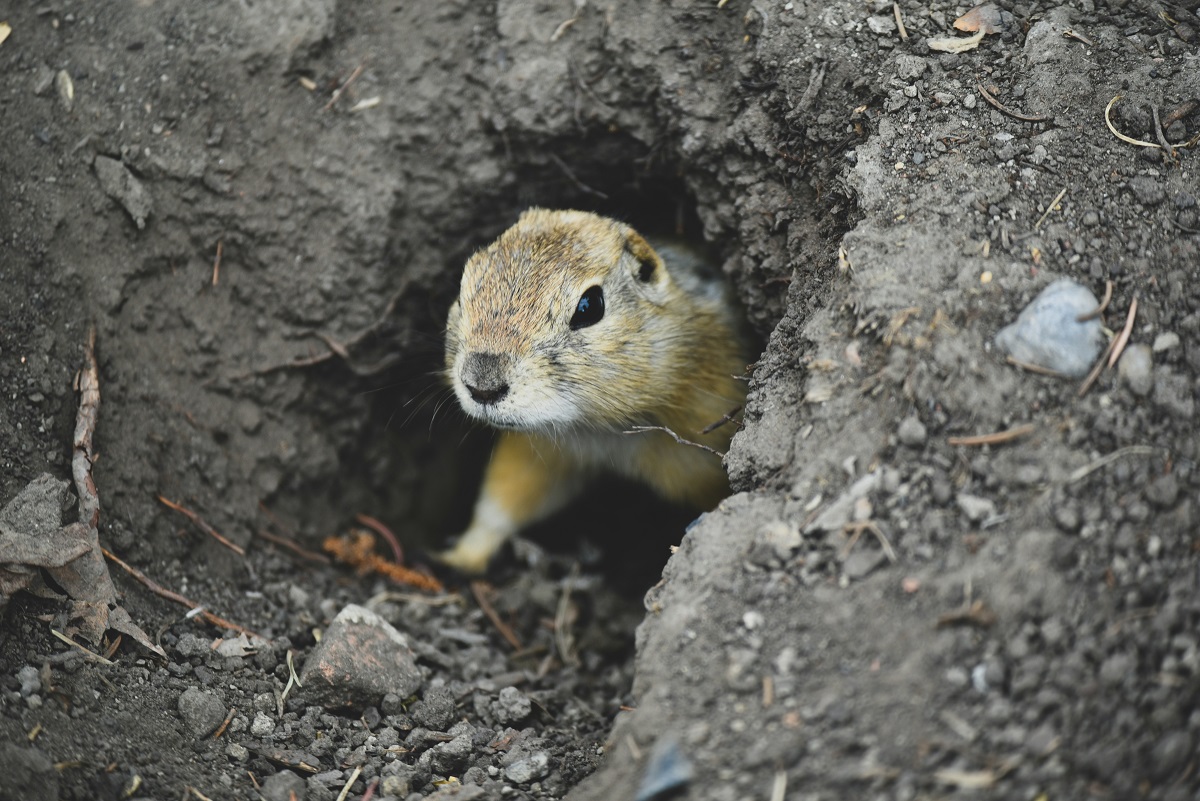
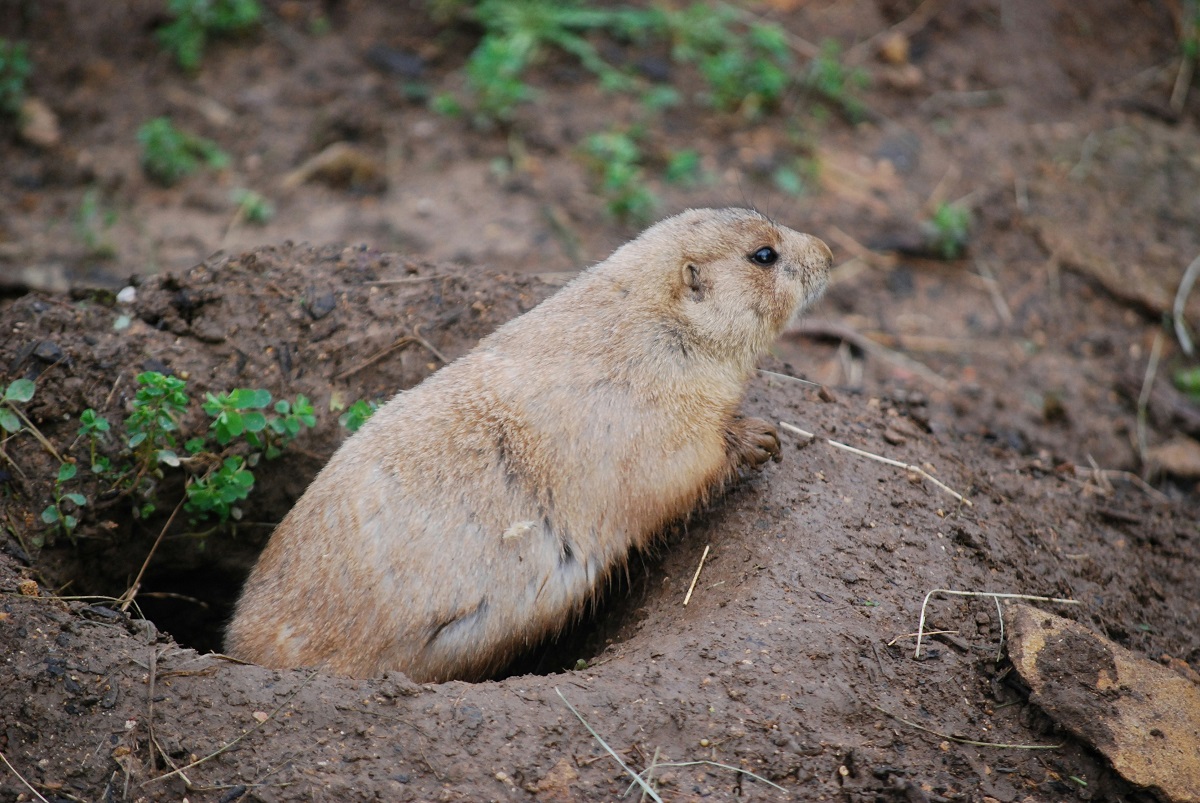
When you catch the digger in action during daylight, the suspect list shrinks fast. Chipmunks, ground squirrels, and groundhogs all work in the open, and each leaves a different calling card.
Chipmunk burrows are the tidiest holes you’ll find in a yard. The entrance runs about two inches across, perfectly round, with no soil mound anywhere nearby — they carry the excavated dirt away in their cheek pouches to hide the entrance. Look for these holes tucked against foundations, retaining walls, woodpiles, and the base of mature trees.
Ground squirrel burrows are larger, usually three to four inches across, and often cluster together in colonies. You’ll see loose soil fanned out from the opening and worn paths connecting multiple entrances. They favor open, sunny areas with good sightlines.
Groundhogs operate on a different scale entirely. Their main burrow entrance can measure ten to twelve inches across, with a sizable mound of excavated dirt beside it and one or more secondary escape holes nearby — those secondary openings are often cleaner, with little or no mound. Groundhog tunnels can run thirty feet or longer and drop several feet deep, which is why they cause real structural concern when dug under sheds, decks, or foundations.
Quick Daytime Digger Checklist
- Hole smaller than a golf ball, no mound, near structures: chipmunk
- Hole the size of a baseball, loose soil fan, multiple entrances in a cluster: ground squirrel
- Hole larger than a softball, big dirt pile, near outbuildings: groundhog
Matching the Right Control Method to the Right Animal
Once you’ve identified the digger, control gets dramatically easier. Each species responds to a different combination of exclusion, habitat modification, and removal.
For moles, the only consistently effective approach is trapping active tunnels with harpoon or scissor traps. Repellents and ultrasonic devices rarely produce lasting results. For voles, mowing tall grass short, clearing mulch away from tree trunks, and installing hardware cloth guards around young trees cuts damage significantly.
Grub hunters respond best to removing the grubs. Apply beneficial nematodes in late summer or use a targeted grub control product, and the skunks and raccoons usually move on within a few weeks because the meal is gone. Secure trash cans, bring pet food inside, and clean up fallen birdseed to remove secondary attractants.
Chipmunks and ground squirrels can be live-trapped where legal, but exclusion works better long term. Seal gaps along foundations, keep seed and nut sources off the ground, and consider gravel barriers around high-value plantings. Groundhogs almost always require professional removal when they’ve dug under a structure, since their burrows compromise soil stability and simply filling the hole without evicting the animal first can trap it inside.
When to Call a Professional
Some situations call for expert help rather than DIY attempts. Reach out to a licensed wildlife control operator when:
- A burrow runs under a foundation, deck, patio, or walkway
- You suspect a protected species based on state regulations
- Damage keeps returning after multiple control attempts
- The animal appears sick, aggressive, or active at unusual times
- You’re uncomfortable handling traps or confirming species identification
Professionals also carry liability insurance and know the legal relocation and disposal rules in your area, which matters more than homeowners typically realize. A fifty-dollar service call often saves hundreds in misdirected products and repeat damage.
Final Thoughts
Underground damage looks chaotic at first, but every digger leaves a readable signature if you slow down and inspect it carefully. Hole size, soil displacement, surrounding patterns, and the time of day the activity appears will narrow the suspect list within minutes. From there, matching the right control method becomes straightforward instead of a guessing game that drags on all season.
The homeowners who solve these problems quickly are the ones who resist the urge to react immediately. They photograph the damage, compare it against reliable identification resources, and address the attractants pulling animals in before setting a single trap. That order of operations — identify, modify, then remove if necessary — consistently outperforms the buy-a-trap-and-hope approach.
Keep a short mental checklist for the next time fresh holes appear: measure the opening, check for a mound, note the time, and look for secondary signs like tracks or chewed plants. With those four observations, you’ll know whether you’re dealing with a mild nuisance or a serious problem, and you’ll be ready to respond with a plan that actually fits the animal you have.